How to Check What Your Pokémon Card Is Worth
A simple step by step guide to finding the value of any Pokémon card: identify the exact card, check the right price, and understand condition and grading.
Updated September 30, 2026

Two cards can look almost the same and still have very different prices. A Charizard from Base Set can be worth a few hundred dollars or many thousands, depending on the exact printing and its condition. The good news: checking the value of a Pokémon card only takes a few minutes once you know what to look for.
1. Identify the exact card
Every card has a few details that tell you exactly which version you have:
- The card number in the bottom corner, for example 4/102. The first number is the card, the second number is the size of the set.
- The set symbol next to the number (or on the right side of the artwork on older cards). It shows which expansion the card comes from.
- The finish: normal, holofoil (the artwork shines) or reverse holo (everything except the artwork shines). These are priced separately.
- Edition stamps: a small "Edition 1" stamp on older cards means 1st Edition, which is usually worth much more than the unlimited print.
The fastest way is to scan the card with our free card scanner. It reads the card from a photo and shows the exact match with its current price. You can also search by name and number, for example "Charizard 4/102".
2. Look at real market prices
Asking prices on marketplaces are often much higher than what cards actually sell for. Always look at market prices based on real sales. CardValue.ai shows two sources for every card:
- TCGplayer (USD): the market price in the United States, shown separately for each finish such as holofoil, reverse holo or 1st Edition.
- Cardmarket (EUR): the biggest marketplace in Europe. We show the 30 day average, which smooths out single unusual sales.
Every card page, like Charizard 4/102 from Base Set, also keeps a daily price history so you can see if a card is going up or down.
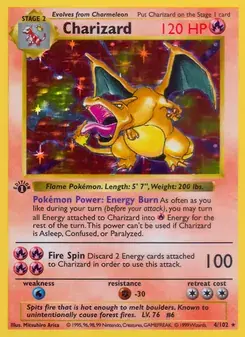
Charizard
4/102 · Base Set
$944.53
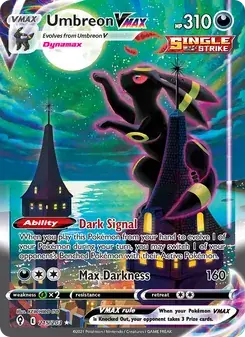
Umbreon VMAX
215/203 · Evolving Skies
$2,214.79
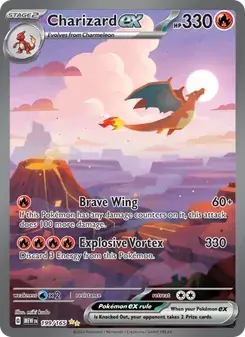
Charizard ex
199/165 · 151
$354.07
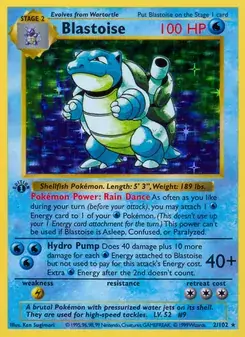
Blastoise
2/102 · Base Set
$222.34
Live market prices, updated daily. Tap a card for all versions and its price history.
3. Be honest about condition
Market prices assume a card in very good shape. Scratches, whitening on the edges, soft corners, creases or an off-center print can lower the value a lot. Hold the card under a bright light and check:
- The corners: are they sharp or rounded and white?
- The edges on the back: do you see white chips?
- The surface: scratches, dents, print lines or a scuffed holo?
- The centering: are the yellow borders about the same on all sides?
Not sure? Our free AI grading tool looks at your photos and gives an estimated grade on the familiar 1 to 10 scale, with notes for every corner and edge.
4. Decide if grading is worth it
A professionally graded card in a sealed slab (for example a PSA 10) can sell for many times the price of the raw card. Grading costs money and takes time, so it is usually only worth it for valuable cards in excellent condition. Read our guides on the Pokémon card grading scale and on PSA vs BGS vs CGC to learn more.
5. Watch out for fakes
If a valuable card seems too cheap, or something feels off about the print, check our guide on how to spot fake Pokémon cards before you buy or sell.
Quick checklist
- Find the card number, set symbol and finish.
- Scan or search the card to get the exact match.
- Check the TCGplayer and Cardmarket market prices for your finish.
- Adjust for condition, or get an AI grade estimate.
- Track your cards in your free collection to follow their value over time.